What Is a Superhero? C By Robin S. Rosenberg
It's easy to name a superhero--Superman, Batman, Thor, Spiderman, the Green Lantern, Buffy the Vampire Slayer, Rorschach, Wolverine--but it's not so easy to define what a superhero is. Buffy has superpowers, but she doesn't have a costume. Batman has a costume, but doesn't have superpowers. What is the role of power and superpower? And what are supervillains and why do we need them?
In What is a Superhero?, psychologist Robin Rosenberg and comics scholar Peter Coogan explore this question from a variety of viewpoints, bringing together contributions from nineteen comic book experts--including both scholars in such fields as cultural studies, art, and psychology as well as leading comic book writers and editors. What emerges is a kaleidoscopic portrait of this most popular of pop-culture figures. Writer Jeph Loeb, for instance, sees the desire to make the world a better place as the driving force of the superhero. Jennifer K. Stuller argues that the female superhero inspires women to stand up, be strong, support others, and most important, to believe in themselves. More darkly, A. David Lewis sees the indestructible superhero as the ultimate embodiment of the American denial of death, while writer Danny Fingeroth sees superheroes as embodying the best aspects of humankind, acting with a nobility of purpose that inspires us. Interestingly, Fingeroth also expands the definition of superhero so that it would include characters like John McClane of the Die Hard movies: Once they dodge ridiculous quantities of machine gun bullets they're superheroes, cape or no cape.
From summer blockbusters to best-selling graphic novels, the superhero is an integral part of our culture. What is a Superhero? not only illuminates this pop-culture figure, but also sheds much light on the fantasies and beliefs of the American people.
What Is a Superhero? C
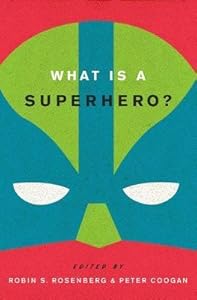
What is a Superhero?, a collection of 25 essays edited by Robin S. Rosenberg and Peter Coogan, doesn’t aim to present “the†answer to this oft-asked question. Instead, it throws open to the door to an array of answers (some of which are directly contradictory) from people across a wide spectrum of fields: philosophers, psychologists, comic book creators, cultural critics, etc. If, as is almost always the case in any collection, the individual essays vary in quality of insight, depth, and style, taken as a whole, What is a Superhero? makes for an always enjoyable and sometimes insightful or thought-provoking read.
The book is divided into four broad sections: a definition of the superhero centering particularly on the three-legged stool of “mission, powers, and identity,†an examination of the role of “context, culture, and ... Read More: http://www.fantasyliterature.com/revi... Robin S. Rosenberg 741.59 W5553 2013 Hardcover This book certainly offers an interesting perspective, though its various essays, on what a superhero actually is and specifically how we define it. Overall, this book is trying to argue that there is no one right definition, and after reading though these diverse articles, I believe it. Peter Coogan notably claims that there are some traits that superheroes seem to have in common (a mission, superpowers, identity: code name and costume), but not all superheroes have all these traits. There are numerous other ways to define superheroes, however, and all of those definitions certainly affect how we view the overall genre and its importance in today's culture and society. 200
What a super fun read! (Pun intended) 0199795274 if you like this review, i now have website: www.michaelkamakana.com
021119: popular culture fascinates me, perhaps because i do not experience it originally as popular culture, that is, only as critically informed some years (decades...) later. so i do not know if this is five for anyone else... maybe it is too intellectual, or too familiar...
friend comics illustrator riley rossmo has read/looked at tens of thousands of graphics, mostly of superhero genre, ever since kid, but when my brother and i were able to read word books our mother would not let us read graphics of any sort. so i missed years (decades...) of boy-culture. my knowledge of superman, spider-man, iron man etc is primarily through much recent hollywood movies, tv history, reading comics now as adult... and talking with riley. before i met him, i had read maybe ten, now i have read about 360 graphics, but not many superhero ones...
as always, it is the art i find most interesting in graphics, but as this is critical nonfiction work there is none. collection of essays, some very good some less, from various perspectives, critical and practical. reminds me of lit criticism read at u, but fun in that way, it helps me to understand nostalgia some male friends have for these modern myths though it might not convince me of transcendent values. but then, finding references to this or that other story in given story seems somewhat parlor game, rather than affirming truths intended for readers. what art i think of in superhero work is often generic, but there are some remarkable images i like, and it is intriguing to have essentially ‘sequential’ nature to tell stories...
there are some inspirations to try works i do not know: particularly x-men with philosophical conflict between separatism/suprematism and more tolerant relationships between humans and mutants... yes there are sff books about this, but do they have extensive and exciting pictorial representations? other than the movies, at least... Hardcover This was a super interesting read with a lot of perspectives I've never heard from before. It took me a while to read, but it was very much worth the time and energy. Robin S. Rosenberg A very interesting read! Makes you think more in depth on superheroes and what makes them so unique. 0199795274 This review originally published in Looking For a Good Book. Rated 5.0 of 5
You can hardly turn around today without seeing a movie or television show featuring a superhero and they're often on the covers of magazines and there are novelizations of their stories. And of course there are the comic books and graphic novels from which many of them sprouted. But what is a superhero? Such is the general question asked and addressed in the collection of essays edited by Robin S. Rosenberg & Peter Coogan.
There is a strong collection of writers included here, musing on what makes a superhero and the social issues surrounding a society's reasons for having superheroes. The collection includes essays from those who might understand the genre the best - writers of superhero stories such as: Stan Lee, Dennis O'Neil, Kurt Busiek, Joe Quesada, and a few others.
I was impressed right out of the gate with Peter Coogan's article, The Hero Defines the Genre, the Genre Defines the Hero. I'd like to quote from the article but the truth is I would simply copy the eight pages and reprint it - the article was packed with thoughtful reflection and commentary. Coogan clearly understands the modern mythology of superheroes.
I did a lot of comic book reading in the 1970's so it's no surprise that talent from that era has a big impact on me. And perhaps it's because of this that I found Denny O'Neil's article, Superheroes and Power, so meaningful. After all, who should know how to write about superheroes and their power than someone who did it so well? His words can be applied not just to superheroes, but to any character who is worth writing about. I really appreciated his comment:
A writer fails the genre when a story depicts superheroes who are weak or do not use their powers. What makes a character interesting (both superheroes and other types of characters) is what he does to solve problems. You give him a knotty situation and he gets out of it. Well, by definition, superheroes use extraordinary physical means.
While I'm only pointing to two articles, this is one of those rare collections in which there are no duds. Every essay is thoughtful and well articulated. I gained some insight and felt that I left the book smarter than when I started. I like that feeling.
This book contains the following:
Foreword - Michael Uslan
Introduction: What Is a Superhero? - Robin Rosenberg & Peter Coogan
Super and Hero: Powers and Mission
Section Introduction
The Hero Defines the Genre, the Genre Defines the Hero - Peter Coogan
We Could Be Heroes - Will Brooker
What is a Female Superhero? - Jennifer Stuller
Straddling a Boundary: The Superhero and the Incorporation of Difference - Clare Pitkelthy
Save the Day - A. David Lewis
Context, Culture, and the Problem of Definition
Section Introduction
Superheroes and the Modern(ist) Age - Alex Boney
Heroes of the Superculture - Richard Reynolds
Superhero by Design - John Jennings
The Experience of the Superhero: A Phenomenological Definition - Dana Anderson
What is a Superhero? No One Knowsâ€"That’s What Makes ‘em Great. - Geoff Klock
Superheroes Need Supervillains
Section introduction
Why Supervillains? - Paul Levitz
Superheroes Need Supervillains - Frank Verano
Superheroes Need Superior Villains - Stanford Carpenter
Super and Villain: A bad guy with superpowers - Curtis Deis
Supervillains Who Need Superheroes (Are the Luckiest Villains in the World) - Andrew Smith
Sorting Out Villainy: A Typology of Villains and Their Effects on Superheroes - Robin Rosenberg
From the Experts: Comic Book Writers Define the Superhero
Section Introduction
More Than Normal, But Believable - Stan Lee
Making the World a Better Place - Jeph Loeb
Nobility of Purpose - Danny Fingeroth
Superheroes and Power - Dennis O'Neil
The Importance of Context: Robin Hood Is Out and Buffy Is In - Kurt Busiek
Superheroes Are Made - Tom DeFalco
Extraordinary - Joe Quesada
The Superprotagonist - Fred Van Lente
Superheroes and Supervillains: An Interdependent Relationship - Ivory Madison
Looking for a good book? The collection of essays, What Is a Superhero? edited by Robin Rosenberg and Peter Coogan is a thoughtful reflection on superheroes - who are our modern mythological figures. The book is highly recommended.
I received a digital copy of this book from the publisher, through Netgalley, in exchange for an honest review.
Comments
Post a Comment