[Peter Kreeft] ↠ The Philosophy of Tolkien: The Worldview Behind The Lord of the Rings [Philosophy Book] PDF ☆ Read Online eBook or Kindle ePUB
The book started with a great promise to me: A discussion about Tolkien's philosophy, which is certainly not in line with today's popular worldview and values. But the book quickly descended into a Christian and Catholic empty propaganda. The writer apparently wrote this book not in order to discuss and think about Tolkien and his worldview, but rather to proselytize his own Catholic faith. I would have expected a philosophy book to raise more questions than answers; here the exclamation marks rule.
Mid-way the book gets really repetitive with the same themes repeating over and over. In some instances, even the same quotes were quoted again. But yet again, when your goal is to preach, repetition is necessary. Paperback Exploring Tolkien's world was not just interesting (that all-purpose meaningless euphemism). It was not even just fascinating. It was sheer joy. For we knew that here we had touched truth. This book was a homecoming. This book broke our hearts...
The author delves into the rich and complex mythology of Middle-earth, examining the powerful symbols and archetypes that pervade throughout the story. He explores the concept of evil and its manifestation in the form of Sauron and the Ring, as well as the struggle between good and evil that is a central theme of the story. He also looks at the idea of sacrifice, the power of friendship, and the role of fate and destiny in the lives of the characters.
The book also sheds light on the Catholic beliefs and values that were a fundamental part of Tolkien's worldview, and how they influenced his writing. The author examines the themes of sin, grace, and redemption, as well as the idea of providence and the guidance of a higher power. He shows how these themes are reflected in the story, from the journey of Frodo and the other hobbits to the ultimate victory of good over evil... The Philosophy of Tolkien: The Worldview Behind The Lord of the Rings I had never read anything by Kreeft before, and the terseness caught me off guard and felt a bit abrupt at times. The book felt disjointed in places, because he moves so quickly through so many huge topics. When I finished, I felt that I had garnered a lot of nice tidbits. Paperback Just great Peter Kreeft Another great book to understand the author.
Agreeing or not, liking it or not, this and Sanctifying Myth are great material to comprehend Middle-Earth, better than a whole book of appendices. 1586170252
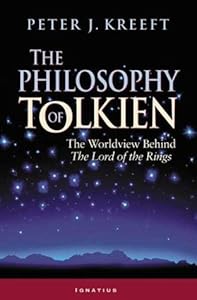
The Philosophy of Tolkien: The Worldview Behind the Lord of the Rings, Peter Kreeft
The Philosophy of Tolkien: The Worldview Behind The Lord of the Rings (2005). Kreeft takes the reader on a voyage of discovery into the philosophical bones of Middle earth. He organizes the philosophical themes in The Lord of the Rings into 50 categories, accompanied by over one thousand references to the text of The Lord of the Rings.
تاریخ نخستین خوانش: روز چهارم ماه می سال2015میلادی
عنوان: ÙلسÙÙ‡ ÛŒ تالکین جهان بینی پشت ارباب Øلقه ها؛ نویسنده: پیتر کریÙت؛ موضوع: نوشتاری درباره ÛŒ ارباب Øلقه ها - از نویسندگان ایالات متØده آمریکا - سده21Ù…
کریÙت خوانشگر خویش را به سÙری اکتشاÙÛŒ به استخوانهای ÙلسÙÛŒ سرزمین میانه میبرند؛ ایشان نوشتارهای ÙلسÙÛŒ «ارباب Øلقه ها» را در پنجاه دسته سازماندهی میکنند، Ú©Ù‡ با بیش از هزار ارجاع Ùˆ نمونه از متن «ارباب Øلقه ها» همراه هستند
تاریخ بهنگام رسانی 15/02/1400هجری خورشیدی؛ 23/12/1400هجری خورشیدی؛ ا. شربیانی 1586170252 Where do I start. In writing this book, Kreeft is intellectually dishonest, dismissive, and condescending, and he demonstrates exceedingly poor scholarship.
Normally I'd keep a negative review like this to myself, but because Kreeft is a public figure and this is a book that people are likely to read and be influenced by (in part because of Kreeft's position as a professor of philosophy at a notable college), I feel like it's important to add this review to the list.
Strap in...
My criticisms. First, the premise of the book is intellectually dishonest. This is not a philosophy of Tokien. It is the theology of Kreeft. He does not present things as what Tokien believed, but rather presents certain claims as true and uses LOTR to prove the truth of those claims. It's ludicrous. Fiction doesn't demonstrate -- it illustrates. And it doesn't illustrate truths but beliefs. While there is certainly a worldview of LOTR, and while Kreeft does make assumptions that Tokien certainly shared (the assumptions of Christianity, mostly), LOTR is not a Christian world. Christianity was an influence, but Kreeft uses LOTR to demonstrate his own beliefs. If he were honestly trying to demonstrate the worldview of LOTR, he would have analyzed LOTR much, much more deeply and intricately. We get far more of Kreeft's opinion than of an LOTR analysis.
Secondly, the use of the word philosophy in the title drives me bonkers. This is a theology. Kreeft uses philosophical fields and themes to examine Tokien's theology -- philosophy is a tool he uses to make theological arguments.
Thirdly, the tone. DEAR HEAVENS, THE TONE. Kreeft dismisses every philosophical position that conflicts with his own. There is no room in his presentation for the validity of other interpretations of things that we cannot know for certain. I am all for holding opinions, even of opinions that can't be proven (such is life), but this was incredibly off-putting and egregious, especially for a professor of philosophy.
Finally, Kreeft relies very heavily on C.S. Lewis's theology to argue for Tokien's. In some ways, this makes sense. Lewis wrote far more theological/apologetic works than Tokien, and the two were good friends and fellow Christians -- surely they shared some big, overarching beliefs. But Lewis featured so prominently, and primarily in defense of Kreeft's stated opinions, that Tokien was lost far more than he was found in those passages.
Ok, after all that negative, I do have a positive. It will sound passive-aggressive, but I mean it sincerely. Encountering different arguments, even poor ones, for claims to truth is helpful and good. It sparks new ways of arguing for what is real, true, and logical. It forces us to clarify arguments in new and slightly different ways, which leads us to make better arguments or to modify our beliefs if we come up with something we can't explain or argue well for. It also makes us better at communicating with people we disagree with. Kreeft's rhetorical style is not one that honestly engages with truth, but only with established, personal, and biased opinions. That in itself is an important style to learn to identify.
I am absolutely shocked that Kreeft is a professor of philosophy at such a reputable college. His utter disdain for the field should be disqualifying. I would be interested in hearing his actual philosophical arguments and engaging with them on an intellectually honest level, but Kreeft does not provide that opportunity in this book. This book offered so much on the title and delivered almost nothing substantive. Such a disappointment. 237 This book has been on my reading wish list since it came out a few years ago. I finally made time to read it, and I'm so glad I did!
As Kreeft â€" a Roman Catholic theologian and a professor of philosophy at Boston University â€" points out in the introduction, The Lord of the Rings is widely considered the greatest book of the twentieth century, though not all literary critics agree. Of course, I would certainly have to join the ranks of those showering accolades upon Tolkien's masterpiece!
This book is exactly what you might expect from its title: a study of the philosophical themes and underlying worldview behind the story of LOTR. Many authors have attempted similar books seeking to cash in on the story's popularity, but few have done it well. Thankfully, Kreeft has given us an outstanding work that is both educational and enjoyable; academically substantial yet easily accessible. At times, his wit and humor even had me laughing out loud!
The format of the book is simple: Fifty philosophical questions are separated into 13 categories. Kreeft explains the meaning and importance of each question, and then shows how the question is answered using quotes from LOTR, The Hobbit, and The Silmarillion. Tolkien's thoughts on the matter are further explored, making use of his other writings â€" most notably letters he had written, as well as an essay entitled On Fairy-Stories. Each question's section ends with a quote from the writings of C.S. Lewis â€" Tolkien's closest friend and fellow Oxford professor â€" which directly states the same philosophy. The two had great influence on one another, and throughout this book we see how closely they paralleled one another due to what Kreeft calls their common familiarity with and respect for the same sources in the great tradition, that is, pre-modern Western literature, philosophy, and religion.
As someone not particularly well-versed in the academic field of philosophy, I enjoyed very much this foray into the method of investigating philosophical issues. Indeed, an introduction to philosophy is one of the four uses of this book suggested by its author, though that is not the reason I initially chose to read it. Still, while some of the questions asked in this book are particular to LOTR, most are broad in scope, and could be applied to any religion, cultural artifact, or work of literature. At many points in the book, Tolkien's views are compared and contrasted with those of history's great philosophers, from Plato to Satre to Nietzsche.
Kreeft's logic is impeccable, and the systematic progression of thought in this book presents a very strong case for his conclusions. Though I do not wish to spoil for you the joy of discovering these conclusions for yourself as you read through this book, I feel it won't be giving too much away to say that Kreeft concludes that Tolkien's philosophy is unabashedly Christian, and specifically Catholic â€" something Tolkien himself has claimed in so many words. While Christ (or religion itself, for that matter) is nowhere explicit in the text of LOTR, Christianity is implicit throughout the story in the philosophical worldview which undergirds it.
I nearly wore out the pen I was using to underline memorable and thought-provoking lines from the book. Time does not allow me to share all of the truly great insights Kreeft provides, but there was one thing that especially caught my interest. This was where Kreeft pointed out Tolkien's portrayal of the Old Testament pre-figuring of the Messiah as prophet, priest, and king, represented by Gandalf, Frodo, and Aragorn, respectively. Not allegorically, of course, but in the sense that each of those characters was something of a Christ figure (down to the fact that all three had apparent deaths and resurrections in LOTR), exemplifying lives of self-sacrifice and virtue, albeit in very different manners.
If you are a fan of The Lord of the Rings, you will greatly enjoy and benefit from this book. It will give you a brand new understanding of what may well be your favorite story... not to mention an itch to read the trilogy again! Now where did I put my copy of The Fellowship of the Ring? Paperback This was like a class in applied philosophy. Peter Kreeft looks at the philosophies embodied in The Lord of the Rings and also explains basic philosophical concepts along the way. This is a book that examines The Lord of the Rings in a different way than other books I've read about it and I enjoyed it a lot. Paperback Peter J. Kreeft’s The Philosophy of Tolkien is a really good book. While he uses this text to reaffirm his own belief in a Christian god, and these elves are not really Christian, we feel certain that his conclusions are an accurate reflection of Tolkien’s own beliefs, for he was a Catholic. Often, it seems to these elves that Mr. Kreeft while appearing to use logic and reason for his affirmation of his Christian beliefs actually, at the last moment, does a sort of intellectual slight of hand and ends up with faith rather than fact for his final assertions. However, that doesn’t bother us at all. Being lovers of Tolkien’s works and having an undergraduate degree in Philosophy and Religion we find this book quite well written and intriguing, even if it is not always logical. But then, we are elves and Mr. Kreeft is clearly, like Tolkien, a hobbit and our worldviews tend to be different. Still, we know that in sharing Middle Earth with these hobbits we are dealing with good, decent folk, and really what more can one ask for?
The Silver Elves authors of Faerie Unfolding: The Cosmic Expression of the Divine.
Peter Kreeft
While nothing can equal or replace the adventure in reading Tolkien’s masterwork, The Lord of the Rings, Peter Kreeft says that the journey into its underlying philosophy can be another exhilarating adventure.
Thus, Kreeft takes the reader on a voyage of discovery into the philosophical bones of Middle earth. He organizes the philosophical themes in The Lord of the Rings into 50 categories, accompanied by over 1,000 references to the text of Lord.Since many of the great questions of philosophy are included in the 50-theme outline, this book can also be read as an engaging introduction to philosophy. For each of the philosophical topics in Lord, Kreeft presents tools by which they can be understood. Illustrated. The Philosophy of Tolkien: The Worldview Behind The Lord of the Rings


Comments
Post a Comment